Mid-June. A customer who had held a booking at your restaurant for six months cancels the table. You look into it. The reason is a Reel from a competitor with a beautifully plated dish, a smiling waitress and a user calling it “the best place for dinner in Palma”.
Sound familiar? It happens every day in Mallorca. Social media is no longer an add-on for a restaurant: it’s its main shop window. Before reading reviews, before looking at the menu, before walking through the door, customers look at your Instagram. If what they see doesn’t make their mouth water, they don’t come.
Here we explain which types of content really work for restaurants in Mallorca (with specific examples), which mistakes 80% of the venues we audit at islaNet make, which monthly calendar to follow and how to measure whether this is bringing you real bookings, not just empty likes.
Why restaurants in Mallorca play in a different league
Mallorca has three things that distort any generic social media strategy for hospitality.
Extreme seasonality
Your editorial calendar can’t be flat. From April to October you’re competing for tourists’ attention (audiences with different languages and browsing habits, often on mobile). From November to March you’re competing for the local Mallorcan who comes back. They’re two different businesses with two different kinds of content.
Hyper-dense competition
In Pollença in August, every venue is open at the same time trying to fill tables. Being on social media doesn’t set you apart. Doing it well does.
Photos, reviews and recommendations
They can influence the choice. Review how your customers find you and keep the information and experience you show consistent across every channel.
The 8 types of content that really work for Mallorca restaurants
This comes from real work with hospitality clients in Mallorca, not from generic manuals. They’re formats to test and measure according to the restaurant and its audience.
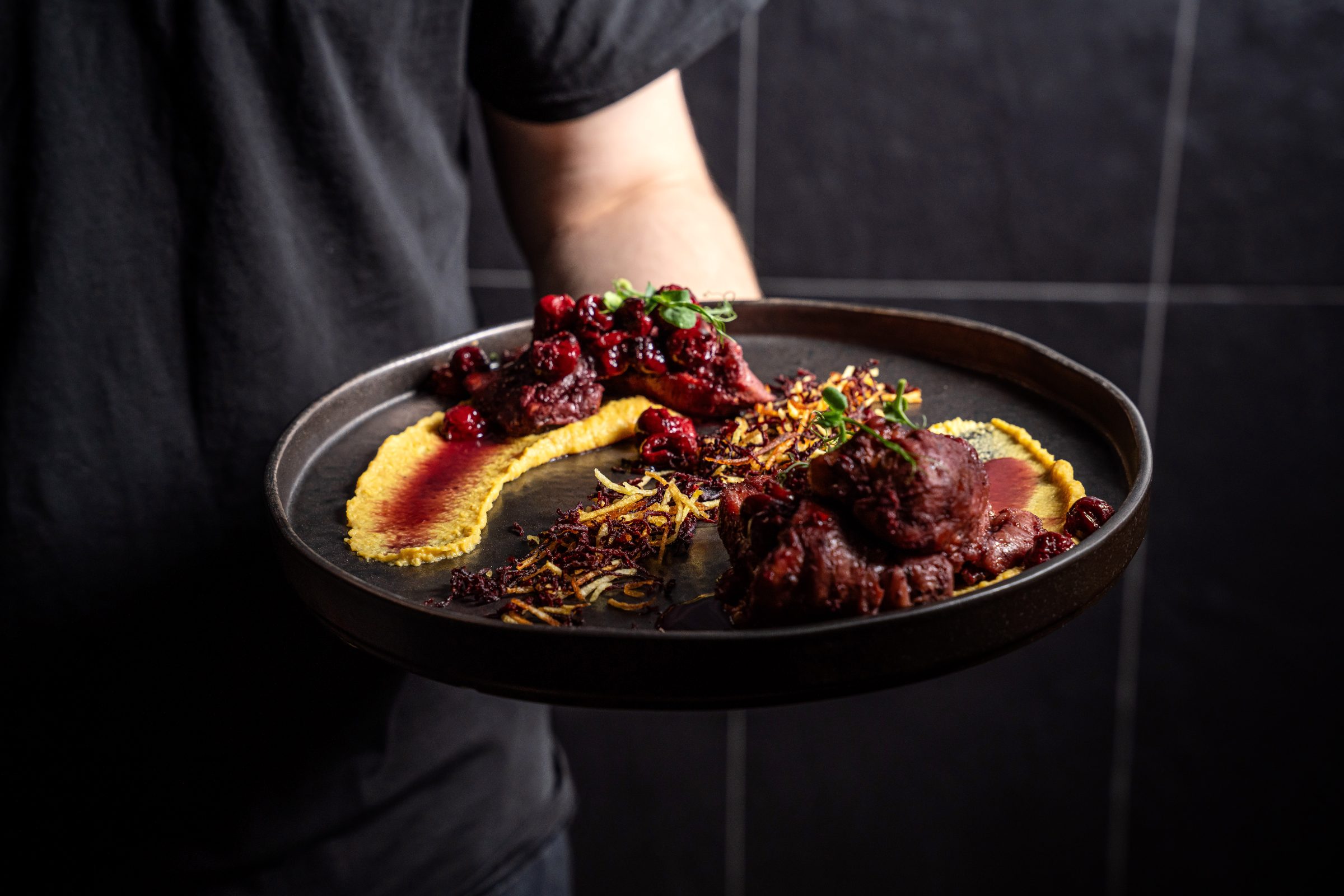
Plated dish from an overhead camera
Neutral background, natural light, a freshly plated dish, the chef’s hands placing the final piece. An 8- to 12-second video. It works on Instagram Reels and TikTok. Measure retention, saves and attributable bookings separately.
Behind the scenes of the produce
The fish arriving in the kitchen, the cook cleaning oysters, the bread fermenting. It adds context and authenticity. It turns a restaurant into “one where things are done properly”. Especially strong for venues with fresh Mallorcan produce.
Waiter or chef talking to camera
15 to 30 seconds. “This is what we’ve just taken out of the oven” or “today’s pasta is…”. A human voice, a recognisable person. It builds a relationship before the customer walks in. They book already knowing a face.
30-second “full experience” Reels
Arriving at the venue, the table, the dish, the atmosphere, a smiling customer, the menu shot from above and a drink in hand. It shows the whole customer journey in half a minute. It works very well with trending audio on Instagram or TikTok.
“Seasonal menu” carousel
5 to 7 photos of the current menu with prices visible. Important: prices yes, transparency always. People book knowing what they’ll pay. Hiding prices creates friction and drop-off.
Real customer review (story and pinned post)
A screenshot of a good Google review, a photo of the customer (with permission) and a highlighted quote. Pure social proof. Even better if the review mentions something specific (“the sea bass with lemon was perfect”) worth repeating.
Location, views and atmosphere
If you have a terrace, sea views, a garden or a beautiful dining room, make the most of it. In Mallorca the atmosphere sells as much as the food. Reels at sunset or at night with warm light work especially well for premium bookings.
One-off events and “this weekend only”
A wine-pairing dinner, a special Valentine’s menu, Sunday brunch. Urgency converts. Story, post and Reel with a call to book directly. Include a clear link to the booking system and check attributable bookings during the campaign.
What not to post (typical mistakes)
This is the content we see repeated on Mallorca restaurant accounts that never quite take off. It isn’t opinion: they’re reproducible patterns that hurt conversion.
- Photos with flash or yellow artificial light. The tastiest dish in the world, photographed under the venue’s fluorescent overhead light, looks like hospital food. If you don’t have a window, use 5500 K LED light or go outside to take the photo.
- Generic posts like “Good morning, we’re open!”. Every day. No photo of the food. No context. It’s the first symptom of an abandoned account. Add useful information and check how your audience responds.
- The full menu photographed as a PDF. Yes, we still see it. Customers won’t zoom in to read 30 dishes. If they want to see the menu, they’ll open the website. On Instagram they want to see the dish photographed.
- Reposted motivational quotes. “Food is the universal language”. No photo of the venue. Nothing of your own. Add your own context so the content is relevant to your restaurant.
- Constant promotions with no brand content. If all you post is “20% off”, you train customers never to book at full price. Strike a balance: 70% brand content and 30% occasional promotion.
- Hiding prices. “Ask us by DM”. Fatal in 2026. People who have to ask the price have already gone to the next restaurant. Transparency means more bookings.
- Stories without sound or text. Subtitle key videos so the message is understood even without sound.
Monthly editorial calendar for restaurants in Mallorca
This is a weekly schedule that works well for a mid-to-upper-range restaurant in Mallorca. Adjust the frequency to your real production capacity: 3 good posts a week are better than 8 mediocre ones.
| Day | Format | Goal |
|---|---|---|
| Monday | “Back to work” Reel: the week’s star dish | Win bookings for midweek |
| Tuesday | Behind-the-scenes story (kitchen, produce arriving) | Authenticity and relationship |
| Wednesday | Seasonal menu carousel with prices | Transparency and informed decisions |
| Thursday | Reel of the chef or waiter talking to camera | Relationship and a recognisable face |
| Friday | 30-second “full experience” Reel with trending audio | Weekend bookings |
| Saturday | Live stories during service (the real atmosphere) | Making people want to come, in real time |
| Sunday | Featured review post and customer photo with permission | Social proof for the week ahead |
This is the foundation. On top you add one-off events (wine-pairing dinner, Valentine’s Day, Mother’s Day, Christmas), responses to trends (viral audio, a Mallorcan festivity, a local event) and seasonal capsules (summer menu, truffle menu, asparagus menu).
Which network to prioritise for your type of restaurant
You don’t have to be on every network. You have to do well on the ones that matter to your customers. This is the prioritisation that works best in Mallorca by type of venue:
| Type of restaurant | Main network | Secondary network | Optional network |
|---|---|---|---|
| Boutique restaurant with a view or a unique atmosphere | Instagram (Reels and posts) | TikTok | |
| Neighbourhood family restaurant | Facebook and Google profile | — | |
| Tapas or casual restaurant for a young crowd | TikTok | — | |
| Fine dining or Michelin-starred | Instagram (carefully curated aesthetic) | LinkedIn (B2B events) | |
| Beach club or tourist beach bar | Instagram (in English and Spanish) | TikTok | Facebook (families) |
| Café or brunch spot | TikTok |
The Google profile (Google Business Profile) can help an eligible restaurant show its location, opening hours, menu and reviews on Google. Keep the profile up to date and follow its guidelines; creating one isn’t a general obligation and doesn’t guarantee appearing first. We work on it in local SEO in Mallorca.
How to measure whether your social media brings real bookings
This is where almost every restaurant fails. They post a lot, see likes, feel it’s “going well” and can’t attribute how many tables were filled thanks to Instagram. There are three specific ways to measure it:
- A bio link with UTMs to your booking system. If you use CoverManager, TheFork, OpenTable or similar, set up a unique link for Instagram with UTM parameters. They identify the campaign bringing traffic if the system keeps them and records the conversion. Check the integration with bookings and the applicable consent. They don’t guarantee attributing 100% of bookings or prove causality.
- Exclusive promo codes per network. “INSTA-20” for a wine-pairing dinner, “TIKTOK-15” for brunch. When taking payment, the waiter records the code. It tells you which network converts best without complex digital tracking.
- Asking the customer directly when confirming the booking. “How did you hear about us?”, on the form or by phone. It’s qualitative but it adds up: if 40% of your new customers found you through Instagram, you have an impact metric, not an activity one.
Measure attributable bookings and cost per booking: attributable investment / attributable bookings. To calculate ROI you also need revenue and all attributable costs, including product, service and marketing: (attributable revenue − total attributable costs) / total attributable costs × 100. Bookings per euro aren’t ROI. More in how to measure your social media ROI.
A real case: a Mallorcan cuisine restaurant in Palma
At islaNet we’ve been running the social media of a contemporary Mallorcan cuisine restaurant in the Santa Catalina neighbourhood for almost two years (we can’t name it because of a confidentiality agreement, but the data is real). A 38-table venue, average spend of €45, a mixed audience of locals and Spanish and European tourists. The strategy we applied over the last quarter:
- 3 Reels a week: a plated dish shot from above, the chef’s voice explaining the recipe and a shot of the week’s local Mallorcan produce.
- Daily stories during service: the dining room atmosphere, the open kitchen and a real customer (with permission) reacting to the dish.
- 1 weekly menu carousel with the daily set menu and visible prices, and a monthly carousel with the full seasonal menu.
- A €450/month Meta Ads campaign targeting over-30s in central Palma’s postcode and tourists staying at hotels in the area.
- An optimised Google profile, with monthly professional photos and replies to every review within 48 hours.
Result in 12 weeks: 186 additional bookings attributable to the bio link and promo codes, a 312% return on the total social media investment and a 19% increase in average spend (customers won through social media order more wine pairings and desserts). They also moved from 7th to 2nd place on Google Maps for “Mallorcan restaurant Palma”. An important detail: the restaurant already cooked well. Social media doesn’t invent quality: it amplifies it.
Social media for restaurants FAQs
How many times a week should a restaurant in Mallorca post?
Choose a frequency you can sustain with useful content and review it with your audience data. The calendar in this article is a working proposal, not an algorithm requirement: posting fewer than three times a week doesn’t mean Instagram stops showing the account.
Is Instagram or TikTok better for a restaurant in Mallorca?
It depends on the audience and the type of venue. Instagram is still the core network for bookings: an adult audience, deliberate decisions, high conversion. TikTok works better for tapas, brunch or young concepts, and attracts lots of international tourists under 30. The ideal in Mallorca: Instagram and TikTok with the same content adapted in format.
Do I need to hire a professional photographer, or will a phone do?
To start with, a phone is enough if you have good natural light and know how to frame. To scale results, professional sessions once a month or once a quarter make the difference. To book a session, compare the budget, number of pieces, editing, usage rights and frequency according to your needs.
What do I do if I have little time? I’m the owner and I cook myself.
Outsource at least the visual production and editorial planning. A photo and video session every 3 months and a local agency or community manager who posts according to the calendar remove the worst problem: inconsistency. Spend 15 minutes a day on live stories (showing the kitchen, answering messages) and leave the rest to someone who knows how.
How much does it cost to manage a restaurant’s social media in Mallorca?
The budget depends on the networks, formats, volume of content, on-site production, response hours and ad management. Ask for a breakdown and confirm whether it includes ad spend and what community management coverage is offered.
How long does it take to notice the impact on bookings?
The timeline depends on the starting point, the offer, the budget, availability and the season. Track attributable bookings from the start and compare equivalent periods. There’s no fixed week for the first bookings or a guaranteed month of peak performance.
Should I also post in English if I have tourist customers?
Yes, but don’t translate everything. Keep your main content in Spanish or Catalan for the local audience (your base of repeat customers) and add English text when the content is clearly visual (atmosphere Reels, views, wide shots). In stories during high season, alternate languages. Don’t use badly written machine translations: they take away more credibility than they add.